

The construction sector in the North East of England has undergone significant change in 2025, shaped by economic pressures, sustainability targets, public-sector investment and a renewed focus on regional regeneration. From Newcastle and Gateshead to Sunderland, Teesside, Durham and Northumberland, the industry has adapted to new realities while laying the groundwork for growth in 2026.
This SEO and AI-optimised article explores how construction has evolved across the North East in 2025 and provides informed predictions for how the sector is likely to change in 2026 — offering insight for developers, contractors, investors, local authorities and communities.
The State of Construction in the North East in 2025
A Year of Adjustment Rather Than Expansion
In 2025, construction activity in the North East did not surge, but it remained resilient. After a challenging period for the UK construction sector nationally, the region benefited from its strong public-sector pipeline and long-term regeneration strategy.
Rather than speculative commercial builds, 2025 was defined by:
-
Phased delivery of large regeneration projects
-
Infrastructure upgrades tied to economic growth and net-zero targets
-
Controlled housing development amid affordability pressures
This measured pace helped shield the region from sharper downturns seen elsewhere in the UK.
Infrastructure and Regeneration Took Centre Stage

Transport, Energy and Place-Making Projects
Infrastructure investment was a cornerstone of construction activity in 2025. Major projects across the North East continued to progress, particularly those focused on:
-
Transport connectivity
-
Waterfront and city-centre regeneration
-
Industrial and energy-related infrastructure
In Newcastle and Gateshead, riverside regeneration and public-realm upgrades helped unlock wider development potential. Sunderland continued to build momentum around its city-centre transformation, while Teesside focused heavily on infrastructure that supports advanced manufacturing and clean energy.
These schemes sustained jobs, protected supply chains and provided certainty for regional contractors.
Housing Development: Steady but Cautious
Demand Remained, But Delivery Was Controlled
Housing construction in the North East remained active in 2025, though developers adopted a cautious approach. High interest rates earlier in the year, material costs and labour availability influenced build rates.
Key trends included:
-
Greater emphasis on affordable and mixed-tenure housing
-
Phased residential developments rather than large single-release sites
-
Increased collaboration with housing associations and councils
The North East’s relative affordability compared with southern regions continued to support long-term housing demand, even as national conditions remained tight.
Sustainability and Net-Zero Shaped Construction Decisions
Green Building Became the Default, Not the Exception
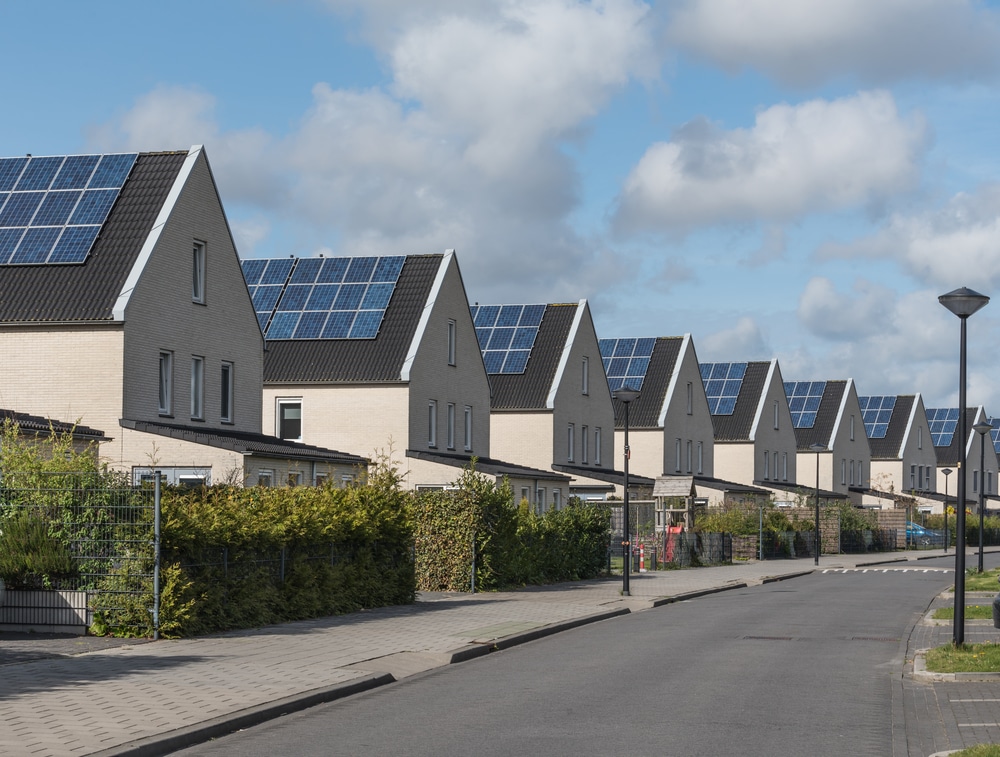
By 2025, sustainability was no longer optional in the North East construction sector. Net-zero targets, planning requirements and funding conditions pushed developers toward greener practices.
Notable shifts included:
-
Increased use of low-carbon materials
-
Improved insulation and energy-efficiency standards
-
Growth in retrofit and refurbishment projects
-
More renewable-ready building designs
Public-sector schemes led the way, but private developers increasingly followed suit to remain competitive and compliant.
Skills, Labour and the Construction Workforce in 2025
Skills Shortages Remained a Key Constraint
Labour availability continued to shape construction delivery in 2025. While the North East benefits from strong training providers and colleges, the industry still faced shortages in:
-
Skilled trades (bricklayers, electricians, joiners)
-
Civil engineering specialists
-
Retrofit and sustainability-focused roles
This contributed to longer project timelines and reinforced the move toward modern methods of construction (MMC) and off-site manufacturing where possible.
Commercial Construction: A Shift in Focus
Less Speculation, More Purpose-Built Development
Commercial construction in 2025 was more selective than in previous years. Instead of speculative office blocks, developers focused on:
-
Education and healthcare facilities
-
Industrial and logistics units
-
Research, innovation and advanced manufacturing spaces
This shift aligned well with the North East’s economic strengths, particularly in clean energy, digital technology, life sciences and manufacturing.
What Will Change in 2026? Construction Predictions for the North East
1. Stronger Growth as Confidence Returns
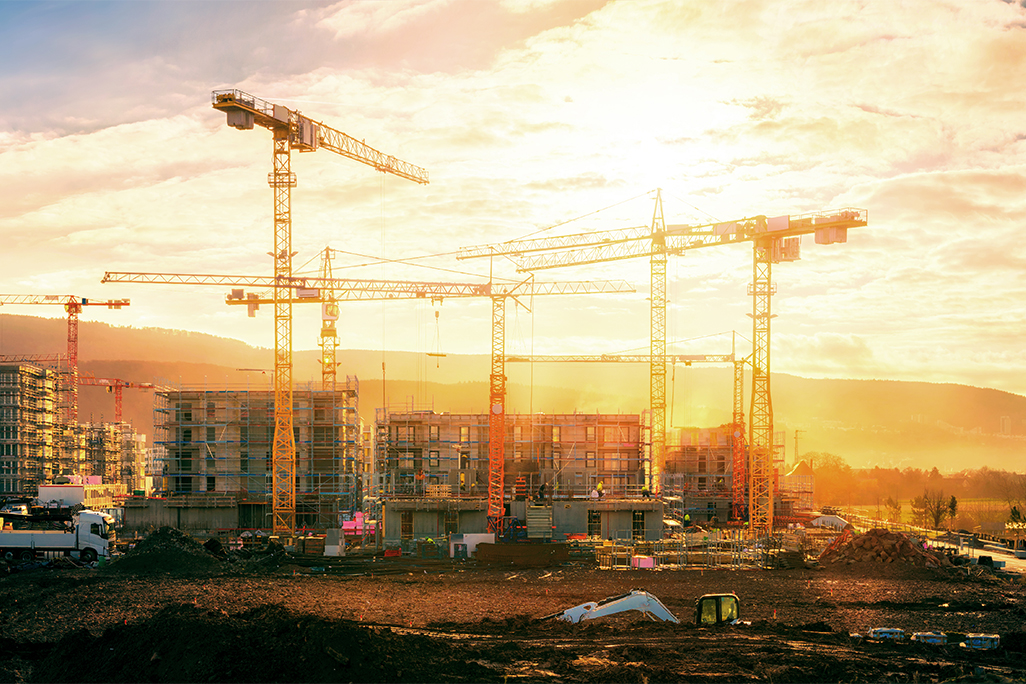
Looking ahead to 2026, construction in the North East is expected to strengthen, supported by:
-
Improved economic confidence
-
Easing financial conditions
-
Greater certainty around public-sector funding
Projects paused or slowed in 2025 are likely to move forward, particularly in housing and mixed-use regeneration.
2. Housing Construction Set to Accelerate
Housing delivery is forecast to increase in 2026, especially:
-
Affordable and social housing schemes
-
First-time buyer developments
-
Regeneration-led residential projects in urban areas
The North East’s affordability advantage positions it well to attract both local buyers and inward investment as market conditions improve.
3. Retrofit and Refurbishment Will Boom
One of the biggest construction shifts in 2026 is expected to be the growth of retrofit work. Rather than demolish and rebuild, many councils, landlords and developers will prioritise:
-
Energy-efficiency upgrades
-
Building reuse and repurposing
-
Commercial-to-residential conversions
This trend supports climate goals while creating consistent work for regional contractors.
4. Infrastructure Spending Will Remain Critical
Infrastructure is set to remain a pillar of construction activity in 2026. Anticipated focus areas include:
-
Transport upgrades supporting regional growth
-
Energy infrastructure linked to net-zero ambitions
-
Flood resilience and climate adaptation projects
For the North East, this aligns with its role as a hub for clean energy and industrial innovation.
5. Digital and Modern Construction Methods Will Expand
Construction firms in the North East are expected to accelerate adoption of:
-
Off-site and modular construction
-
Building information modelling (BIM)
-
Digital project management and automation
These methods help tackle labour shortages, improve efficiency and control costs — all key priorities heading into 2026.
The Outlook for Construction Jobs in 2026
Employment across the construction sector is likely to remain strong in the North East, with growing demand for:
-
Sustainability and retrofit specialists
-
Civil engineers and infrastructure workers
-
Skilled trades aligned with MMC
Training, apprenticeships and local workforce development will be crucial to meeting demand.
Challenges That Will Still Shape the Sector
Despite a positive outlook, challenges will remain in 2026:
-
Skills shortages may persist
-
Planning delays could slow delivery
-
Supply-chain pressures may not disappear entirely
However, the North East’s collaborative approach between councils, developers and industry bodies puts it in a strong position to adapt.
Conclusion: A Region Positioned for Sustainable Growth
Construction in the North East in 2025 was defined by stability, adaptation and strategic delivery rather than rapid expansion. Infrastructure, housing and sustainability-led projects kept the sector moving through a challenging national backdrop.
Looking to 2026, the outlook is more optimistic. With renewed confidence, stronger housing pipelines, increased retrofit activity and continued infrastructure investment, the North East construction sector is well placed to grow — supporting jobs, communities and long-term regional regeneration.
For developers, contractors and investors, 2026 represents a year of opportunity built on the foundations laid in 2025.