
London remains one of the most visited cities in the world, attracting tens of millions of tourists each year. For many, it delivers exactly what they expect: a dense, fast-moving capital filled with cultural landmarks, theatre districts, historic sites and an extensive transport network that connects almost every corner of the city.
Yet alongside that appeal sits a recurring question for visitors planning their stay: is London safe?
London is generally safe for tourists in 2025, particularly in central areas with strong policing and transport infrastructure. But it is also a large and complex global city where risks are uneven, situational and often linked more to environment and behaviour than to any single overarching threat. Understanding those patterns is key to moving through the city confidently.
What Crime Looks Like for Visitors
For most tourists, crime in London does not take the form of serious violence. Instead, it tends to be concentrated around opportunistic theft and distraction-based incidents. Phones being snatched from pedestrians, wallets taken from bags in crowded spaces, and occasional scams in busy tourist zones make up the majority of reported visitor-related issues.
These incidents are most likely to occur in places where attention is divided. Busy streets, transport interchanges, shopping areas and major landmarks create environments where people are focused on maps, photos or navigation rather than their immediate surroundings.
Serious crime involving visitors is rare, and most trips to London pass without incident. The more relevant issue is awareness rather than fear.
Central London: Crowds, Landmarks and Opportunistic Theft
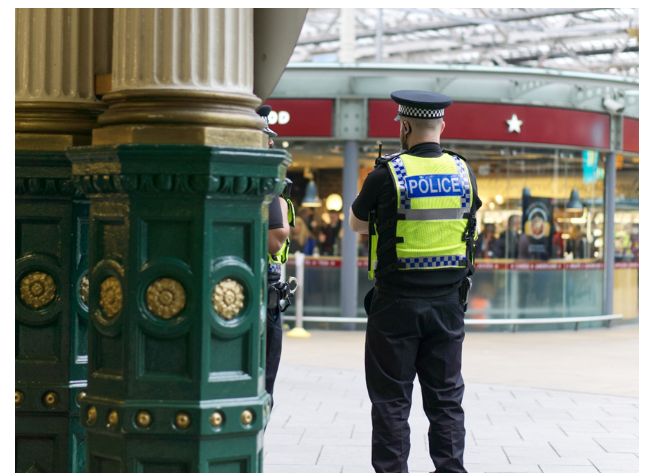
In central London, safety is closely tied to crowd density. Areas such as Westminster, Soho, Covent Garden and Trafalgar Square are among the most heavily visited parts of the city. They are also among the most closely monitored by police, with a strong visible presence particularly during events or demonstrations.
Trafalgar Square illustrates this dynamic clearly. It is one of London’s most iconic public spaces and generally feels safe due to its constant activity and security presence. However, its openness and heavy foot traffic also make it a typical environment for pickpocketing and phone theft. Visitors are often distracted by street performances, protests, or photography, which can create brief opportunities for opportunistic crime.
The key risk in these areas is not confrontation but distraction. Bags left open, phones held loosely near road edges, or valuables placed on café tables near passing crowds are the most common points of vulnerability.
Transport Safety: The Underground, Buses and Stations
London’s transport network is one of the most extensive and heavily used urban systems in the world. It is also, for most visitors, one of the safest ways to move through the city.
The Underground operates with extensive CCTV coverage, frequent staffing and a strong security presence. Trains are generally safe at all hours, including late evenings on major lines. The main issue for visitors is not safety in the traditional sense but congestion. Crowded platforms and busy trains create conditions where phones or bags can be exposed for brief moments, particularly during boarding and alighting.
Buses are widely considered even safer, with lower theft risk and constant driver oversight. Incidents are rare, and the environment is generally stable, even during busy periods.
Major stations such as King’s Cross, Victoria, London Bridge and Paddington are heavily monitored and well-policed, but their high passenger volumes mean they also attract opportunistic theft. Visitors are most vulnerable when distracted by luggage, tickets or mobile phones in busy concourses.
At night, transport remains safe across most of the network, though quieter stations can feel less comfortable simply due to reduced footfall rather than any increased risk.
Night-Time London: Energy and Awareness
London’s nightlife is one of its defining features, and most evenings pass without any issues for visitors. Central nightlife districts such as Soho, Shoreditch and Camden remain busy late into the night, supported by strong transport links and a visible police presence.
However, perceptions of safety often shift after dark. Crowds can still be dense in entertainment areas, which means the same risks of opportunistic theft persist. In quieter residential areas, the opposite issue arises: streets may feel unfamiliar or sparsely populated, which can affect how safe visitors feel, even when actual risk remains low.
The most practical approach at night is to stick to well-lit, busy routes and avoid unnecessary shortcuts through unfamiliar residential streets, particularly when returning from entertainment districts.
Scams and Low-Level Crime
Scams in London are generally low-level and rely on distraction rather than force. In busy tourist areas, visitors may encounter individuals posing as charity collectors or petition organisers. While many are legitimate, some are not, and the safest approach is to remain cautious when approached unexpectedly.
Unlicensed taxis are another occasional risk outside formal ranks, particularly in busy nightlife areas. Licensed black cabs and recognised ride-hailing services remain the most reliable options for safe travel.
ATM distraction scams are rare but can occur in crowded environments, where individuals attempt to divert attention while a transaction is underway.
These incidents are not widespread, but they highlight the importance of maintaining basic awareness in high-footfall locations.
Borough Differences: Why Location Matters
One of the most important aspects of safety in London is that it varies significantly by borough. The city is not uniform, and different areas present different types of environment and risk.
Central boroughs are shaped by tourism and commerce, meaning they are busy, well-policed and generally safe, but also exposed to theft due to crowd density. Inner East London contains a mix of heavily regenerated zones such as Stratford, alongside residential districts where levels of anti-social behaviour can vary depending on time and location.
More residential boroughs in north-west London tend to feel quieter and more predictable, with lower exposure to tourist-targeted crime. These differences matter more than overall city-wide statistics when assessing personal safety.
Migration, Perception and Political Debate
Discussions about safety in London increasingly extend beyond crime itself and into broader political questions, particularly around migration and social cohesion.
From a right-wing UK perspective, concerns are sometimes raised about whether rapid demographic change has placed pressure on housing, public services and policing, and whether this has influenced perceptions of disorder in certain areas of the capital. These arguments are often linked to wider debates about national identity and integration.
Others strongly challenge this interpretation, arguing that crime patterns are more closely connected to economic inequality, deprivation and policing capacity than to migration. London’s diversity is widely seen by many analysts as a defining strength of the city, contributing to its global cultural and economic status.
While these debates are politically sensitive, they do influence how safety is discussed and perceived, even when they do not directly reflect day-to-day visitor experience.
Will I Be Safe Visiting London?
For the vast majority of visitors, London is safe. Millions of journeys take place across the city every day without incident, and serious crime involving tourists is rare.
The more accurate way to understand safety in London is not as a single condition but as something shaped by context. A crowded square, a busy Underground platform and a quiet residential street all present different environments, each with different levels of exposure to risk.
London is a city that rewards awareness rather than anxiety. Visitors who understand how its risks operate — primarily through opportunity, distraction and density rather than direct threat — are unlikely to encounter serious issues.
Ultimately, the question is London safe does not have a simple yes or no answer. But in practical terms, for informed and attentive visitors, the city remains one of the world’s most accessible and manageable global capitals.